Friday, 7 March 2014

Asoka the Great


One of the greatest emperors of all times, Emperor Asoka was a Mauryan ruler whose empire spread across the Indian subcontinent, stretching from the present day Pakistan and Afghanistan to Bangladesh and the Indian state of Assam to Kerala and Andhra in south India, thus covering a vast area. He is known as Asoka the Great since he was one of the most able rulers who ruled India. Under his rule, the entire India was united as one single entity with smooth administration. His life is an inspiration to many as he excelled in everything he did. The name Ashoka means "without any sorrow" in Sanskrit. Read on this biography about the life history of famous Buddhist emperor, Ashoka.

Born in 304 BC, the great king Ashoka was the grandson of the famous ruler Chandragupta Maurya and son of Mauryan emperor Bindusara and his queen, Dharma. As a young lad, Ashoka excelled in whatever he was taught. Be it the art of warfare or reading the Holy Scriptures, Asoka excelled in everything he did. Ashoka had many half brothers and was loved by one and all. Thus, after his father died, his elder brother Suman took over the reign of the kingdom. But most of his father's ministers found Ashoka to be more efficient and helped him attain power. After a three year war, Ashoka was accepted the throne and was crowned as the king of Magadha in 273 BC. After being crowned as the king, he proved himself by smoothly administrating his territory and performing all his duties as an able and courage king.

After a period of eight years of serving as the king, Ashoka planned to seize the territory of Kalinga, the present day Orissa. He led a huge army and fought a gruesome battle with the army of Kalinga. The battle of Kalinga made him pledge to never wage a war again. The battle took place on the Dhauli hills that are located on the banks of River Daya. Though Ashoka emerged victorious at the end, the sight of the battlefield made his heart break with shame, guilt, and disgust. It is said that the battle was so furious that the waters of River Daya turned red with the blood of the slain soldiers and civilians.

The sight of numerous corpses lying strewn across the battlefield made his heart wrench. He felt sick inside. The battle ground looked like a graveyard with bodies of not just soldiers but men, women, and children also. He saw young children crying over the bodies of their dead parents, women crying over the bodies of their dead husbands, mothers crying over the loss of their kids. This turned him heartbroken and thus, made a pledge to never ever fight a battle again. To seek solace, he converted to Buddhism. He was so inspired by the teachings of the Buddhist monks and Buddhist philosophies that he used his status to impart this knowledge all over the world. He is credited to be the first Emperor to make a serious attempt at developing Buddhist policies.



Thursday, 6 March 2014

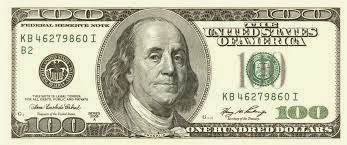
Benjamin Franklin

His Short Autobiography (1706-1757)

Franklin was born in 1706 at Boston. He was the tenth son of a soap and candlemaker. He received some formal education but was principally self-taught. After serving an apprenticeship to his father between the ages of 10 and 12, he went to work for his half-brother James, a printer. In 1721 the latter founded the New England Courant, the fourth newspaper in the colonies. Benjamin secretly contributed 14 essays to it, his first published writings.

In 1723, because of dissension with his half-brother, Franklin moved to Philadelphia, where he obtained employment as a printer. He spent only a year there and then sailed to London for 2 more years. Back in Philadelphia, he rose rapidly in the printing industry. He published The Pennsylvania Gazette (1730-48), which had been founded by another man in 1728, but his most successful literary venture was the annual Poor Richard 's Almanac (1733-58). It won a popularity in the colonies second only to the Bible, and its fame eventually spread to Europe.  

Meantime, in 1730 Franklin had taken a common-law wife, Deborah Read, who was to bear him a son and daughter, and he also apparently had children with another nameless woman out of wedlock. By 1748 he had achieved financial independence and gained recognition for his philanthropy and the stimulus he provided to such civic causes as libraries, educational institutions, and hospitals. Energetic and tireless, he also found time to pursue his interest in science, as well as to enter politics.  

Franklin served as clerk (1736-51) and member (1751-64) of the colonial legislature and as deputy postmaster of Philadelphia (1737-53) and deputy postmaster general of the colonies (1753-74). In addition, he represented Pennsylvania at the Albany Congress (1754), called to unite the colonies during the French and Indian War. The congress adopted his "Plan of Union," but the colonial assemblies rejected it because it encroached on their powers.


During the years 1757-62 and 1764-75, Franklin resided in England, originally in the capacity of agent for Pennsylvania and later for Georgia, New Jersey, and Massachusetts.
During the latter period, which coincided with the growth of colonial unrest, he underwent a political metamorphosis. Until then a contented Englishman in outlook, primarily concerned with Pennsylvania provincial politics, he distrusted popular movements and saw little purpose to be served in carrying principle to extremes. Until the issue of parliamentary taxation undermined the old alliances, he led the Quaker party attack on the Anglican proprietary party and its Presbyterian frontier allies. His purpose throughout the years at London in fact had been displacement of the Penn family administration by royal authority-the conversion of the province from a proprietary to a royal colony.  

It was during the Stamp Act crisis that Franklin evolved from leader of a shattered provincial party's faction to celebrated spokesman at London for American rights. Although as agent for Pennsylvania he opposed by every conceivable means the enactment of the bill in 1765, he did not at first realize the depth of colonial hostility. He regarded passage as unavoidable and preferred to submit to it while actually working for its repeal.  

Franklin's nomination of a friend and political ally as stamp distributor for Pennsylvania, coupled with his apparent acceptance of the legislation, armed his proprietary opponents with explosive issues. Their energetic exploitation of them endangered his reputation at home until reliable information was published demonstrating his unabated opposition to the act. For a time, mob resentment threatened his family and new home in Philadelphia until his tradesmen supporters rallied. Subsequently, Franklin's defense of the American position in the House of Commons during the debates over the Stamp Act's repeal restored his prestige at home.  

Franklin returned to Philadelphia in May 1775 and immediately became a distinguished member of the Continental Congress. Thirteen months later, he served on the committee that drafted the Declaration of Independence. He subsequently contributed to the government in other important ways, including service as postmaster general, and took over the duties of president of the Pennsylvania constitutional convention.

But, within less than a year and a half after his return, the aged statesman set sail once again for Europe, beginning a career as diplomat that would occupy him for most of the rest of his life. In the years 1776-79, as one of three commissioners, he directed the negotiations that led to treaties of commerce and alliance with France, where the people adulated him, but he and the other commissioners squabbled constantly. While he was sole commissioner to France (1779-85), he and John Jay and John Adams negotiated the Treaty of Paris (1783), which ended the War for Independence.  

Back in the United States, in 1785 Franklin became president of the Supreme Executive Council of Pennsylvania. At the Constitutional Convention, though he did not approve of many aspects of the finished document and was hampered by his age and ill-health, he missed few if any sessions, lent his prestige, soothed passions, and compromised disputes.

In his twilight years, working on his Autobiography, Franklin could look back on a fruitful life as the toast of two continents. Energetic nearly to the last, in 1787 he was elected as first president of the Pennsylvania Society for Promoting the Abolition of Slavery-a cause to which he had committed himself as early as the 1730s. His final public act was signing a memorial to Congress recommending dissolution of the slavery system. Shortly thereafter, in 1790 at the age of 84, Franklin passed away in Philadelphia and was laid to rest in Christ Church Burial Ground.

Wednesday, 5 March 2014

10 Things You May Not Know About Roman Gladiators

Beloved by the masses and sometimes scorned by the elites, Roman gladiators were the working class heroes of antiquity. For more than 650 years, people flocked to arenas across the empire to watch these armed and highly trained warriors engage in a blood-soaked spectacle equal parts sport, theater and cold-blooded murder. Get the facts on the enigmatic men-at-arms behind Ancient Rome’s most notorious form of entertainment

1. They weren’t always slavesNot all gladiators were brought to the arena in chains. While most early combatants were conquered peoples and slaves who had committed crimes, grave inscriptions show that by the 1st century A.D. the demographics had started to change. Lured by the thrill of battle and the roar of the crowds, scores of free men began voluntarily signing contracts with gladiator schools in the hope of winning glory and prize money. These freelance warriors were often desperate men or ex-soldiers skilled in fighting, but some were upper-class patricians, knights and even senators eager to demonstrate their warrior pedigree.
2. Gladiatorial bouts were originally part of funeral ceremonies.
Many ancient chroniclers described the Roman games as an import from the Etruscans, but most historians now argue that gladiator fights got their start as a blood rite staged at the funerals of wealthy nobles. When distinguished aristocrats died, their families would hold graveside bouts between slaves or condemned prisoners as a kind of macabre eulogy for the virtues the person had demonstrated in life. According to the Roman writers Tertullian and Festus, since the Romans believed that human blood helped purify the deceased person’s soul, these contests may have also acted as a crude substitute for human sacrifice. The funeral games later increased in scope during the reign of Julius Caesar, who staged bouts between hundreds of gladiators in honor of his deceased father and daughter. The spectacles proved hugely popular, and by the end of the 1st century B.C., government officials began hosting state-funded games as a way of currying favor with the masses.

3. They didn’t always fight to the death.
Hollywood movies and television shows often depict gladiatorial bouts as a bloody free-for-all, but most fights operated under fairly strict rules and regulations. Contests were typically single combat between two men of similar size and experience. Referees oversaw the action, and probably stopped the fight as soon as one of the participants was seriously wounded. A match could even end in a stalemate if the crowd became bored by a long and drawn out battle, and in rare cases, both warriors were allowed to leave the arena with honor if they had put on an exciting show for the crowd.
Since gladiators were expensive to house, feed and train, their promoters were loath to see them needlessly killed. Trainers may have taught their fighters to wound, not kill, and the combatants may have taken it upon themselves to avoid seriously hurting their brothers-in-arms. Nevertheless, the life of a gladiator was usually brutal and short. Most only lived to their mid-20s, and historians have estimated that somewhere between one in five or one in 10 bouts left one of its participants dead.

4. The famous “thumbs down” gesture probably didn’t mean death.
If a gladiator was seriously wounded or threw down his weapon in defeat, his fate was left in the hands of the spectators. In contests held at the Colosseum, the emperor had the final say in whether the felled warrior lived or died, but rulers and fight organizers often let the people make the decision. Paintings and films often show the throngs giving a “thumbs down” gesture when they wanted a disgraced gladiator to be finished off, but this may not be accurate. Some historians think the sign for death may have actually been the thumbs up, while a closed fist with two fingers extended, a thumbs down, or even a waved handkerchief might have signaled mercy. Whatever gesture was used, it was typically accompanied by ear-piercing cries of either “let him go!” or “slay him!” If the crowd willed it, the victorious gladiator would deliver a grisly coup de grace by stabbing his opponent between the shoulder blades or through the neck and into the heart.

5. They were organized into different classes and types.By the time the Colosseum opened in 80 A.D., gladiator games had evolved from freewheeling battles to the death into a well-organized blood sport. Fighters were placed in classes based on their record, skill level and experience, and most specialized in a particular fighting style and set of weaponry. Most popular were the “thraeces” and “murmillones,” who fought with sword and shield, but there were also the “equites,” who entered the arena on horseback; the “essedarii,” who battled from chariots; and the “dimachaerus,” who may have wielded two swords at once. Of all the popular gladiator types, perhaps the most unusual was the “retiarius,” who was armed with only a net and a trident. These warriors tried to ensnare their opponents with their net before moving in for the kill, but if they failed, they were left almost entirely defenseless.

6. They only rarely fought against animals.
The Colosseum and other Roman arenas are often associated with gruesome animal hunts, but it was uncommon for the gladiators to be involved. Tangling with wild beasts was reserved for the “venatores” and “bestiarii,” special classes of warrior who squared off against everything from deer and ostriches to lions, crocodiles, bears and even elephants. Animal hunts were typically the opening event at the games, and it wasn’t unusual for scores of unfortunate creatures to be slaughtered in a single exhibition. Nine thousand animals were slain during a 100-day ceremony to mark the opening of the Colosseum, and another 11,000 were later killed as part of a 123-day festival held by the Emperor Trajan in the 2nd century A.D. While most animals were merely slaughtered for sport, others were trained to do tricks or even pitted against one another in fights. Wild animals also served as a popular form of execution. Convicted criminals and Christians were often thrown to ravenous dogs, lions and bears as part of the day’s entertainment.

7. Women also fought as gladiators.
Female slaves were regularly condemned to the arena alongside their male counterparts, but a few citizens took up the sword of the own free will. Historians are not sure when women first suited up to fight as gladiators, but by the 1st century A.D. they had become a common fixture at the games. These lady warriors may not have been taken seriously in the patriarchal Roman culture—the Emperor Domitian enjoyed pitting women against dwarves—but a few appear to have proven themselves in single combat. A marble relief dating to around the 2nd century A.D. depicts a bout between two women dubbed “Amazon” and “Achillia,” whom the inscription says fought to an honorable draw. Women also joined in the animal hunts, but their stint in the arena may have come to an end around 200 A.D., when the Emperor Septimius Severus banned their participation in the games.

8. Some gladiators organized themselves into trade unions.
Though they were regularly forced to come to blows in life-or-death combat, gladiators viewed themselves as a kind of brotherhood, and some even organized into unions, or “collegia,” with their own elected leaders and protector deities. When a warrior fell in battle, these groups would ensure that their comrade received a proper funeral and grave inscription honoring his achievements in the arena. If the deceased had a wife and children, they would also see that the family received monetary compensation for their loss.

9. Several Roman emperors participated in staged gladiatorial bouts.
Hosting gladiator games was an easy way for Roman emperors to win the love of the people, but a few took it a step further and actually participated in combat. Several rulers performed in the arena including Caligula, Titus and Hadrian—though most likely under highly controlled conditions or with dull blades. A deadeye with a spear, the deranged Emperor Commodus often tried to wow the crowds by killing bears and panthers from the safety of a raised platform. He also competed in a few gladiator fights, though usually against inexperienced fighters or even terrified and poorly armed members of the audience. When he inevitably won the contests, Commodus made sure to reward himself with the massive sum of one million Roman sesterces.

10. Gladiators often became celebrities and sex symbols.
Though often dismissed as uncivilized brutes by Roman historians, the gladiators won massive fame among the lower classes. Their portraits graced the walls of many public places; children played with gladiator action figures made of clay; and the most successful fighters even endorsed products just like the top athletes of today. They were also renowned for their ability to make Roman women swoon. Graffiti from Pompeii describes one fighter who “catches the girls at night in his net” and another who is “the delight of all the girls.” Many women wore hairpins and other jewelry dipped in gladiator blood, and some even mixed gladiator sweat—then considered an aphrodisiac—into facial creams and other cosmetics

Source taken from: http://www.history.com/news/history-lists/10-things-you-may-not-know-about-roman-gladiators

Monday, 16 September 2013

Who posed for Leonardo da Vinci’s Mona Lisa?

Over the years, scholars have debated the true inspiration behind the most famous half-smile in history—and possibly even the world’s most recognizable face. Proposed sitters for the “Mona Lisa” have included da Vinci’s mother Caterina, Princess Isabella of Naples, a Spanish noblewoman named Costanza d’Avalos and an unnamed courtesan, among others. Some of the more provocative theories emphasize the subject’s masculine facial features, suggesting that da Vinci based the portrait on his own likeness or that of his longtime apprentice and possible lover, SalaƬ.
Lisa Gherardini del Giocondo, a wealthy silk merchant’s wife and the mother of five children, has been a leading contender since an art historian identified her as the sitter in 1550, more than four decades after the iconic painting’s completion. The 2005 discovery of a 500-year-old note by an acquaintance of da Vinci, which states that the artist was working on Lisa’s portrait, confirmed the theory for many scholars. It is thought that the Florentine beauty’s husband commissioned the work to celebrate the impending birth of a child; indeed, some have chalked up the subject’s enigmatic expression and loose garments to pregnancy. For reasons that remain unclear, da Vinci never gave the “Mona Lisa” to the Giocondo family, first taking it to France and later bequeathing it to SalaƬ.

Wednesday, 21 August 2013

Gautama Buddha

Siddhartha Gautama was a prince who lived in the kingdom of Sakyas, near the present day border of India and Nepal, more than 2500 years ago. The young prince was raised in great luxury, but he was not happy. He wanted to understand what caused human suffering. He did not understand why some people were rich and others were poor. Why some people were healthy and others sickly.
Siddhartha left his palace and lived as an ascetic. An ascetic is a person who has few material possessions and has given up all pleasures and comforts. He prayed and fasted. To fast is to eat little or no food. Siddhartha fasted so strictly that he nearly died, but he was still not satisfied. Finally, Siddhartha sat down under a bo tree and determined to understand why he had failed to find a satisfying way of life. Late that night Siddhartha Gautama became enlightened.
Siddhartha told other people of his enlightenment. He became well known for his teaching. Siddhartha's students called him "the Buddha," which means "the Enlightened One," and the followers of Siddhartha's teachings are called Buddhists.
The Buddha taught his followers to seek balance in their lives. The path to happiness is neither through indulgence nor denial, but a "middle way." Siddhartha taught that by putting aside your ego, you can escape the cycle of death and rebirth to reach Nirvana.
Gautama Buddha laid emphasis on non-violence and compassion in his teachings. The realisation that life is full of sorrow leads to a boundless love for living things. This love is compassion or Karuna.
Panchasheel: The rules of conduct that are in keeping with the eight-fold path are known as the Panchasheel. Ahimsa, asteya, control over the bodily desires, truthfulness and not taking.. intoxicants are the five rules or the Panchsheel. Gautama Buddha used Pali, the language of the people, to preach.
Bauddha Sangha: Gautama Buddha wanted his doctrine to reach the masses. He, therefore, organised his followers into Bauddha Sanghas. Those followers who left their homes and entered the Bauddha Sangha were called Bhikkus (monks). Strict rules of conduct were prescribed for the Bhikkus. People of all castes were allowed into the Sangha. People from all castes of society entered the Sangha in large numbers, as caste was no barrier. Buddha established women's sanghas,too.

Tuesday, 20 August 2013

The History of the Shaolin Temple in China

At the foot of the Songshan Mountains, the Shaolin Temple was built in the year 495 AD under orders of Emperor Hsiaowen.

The temple was intended as a religious center, as well as a site for the safekeeping and transmission of knowledge. Thus, at the beginning, the temple was made up of one shrine of relicts, and one facility for translating the religious and philosophical scriptures from Sanskrit into Chinese.

Through the efforts of the Indian monk, Bodhidharma (Chinese Ta-Mo), Zen Buddhism was ‘developed’ in the Shaolin Monastery. From here it spread to the entire eastern world, in particular to Japan.

Accompanied by Zen, the development of the marital arts progressed quickly. The two realms are thus inseparably connected to one another.

In the Shaolin temple, the martial arts were practiced both for self-defense and for physical fitness. Of equal importance was the practice of martial arts for mental development. Bodhidharma taught breathing techniques and exercises, which were presumably the foundation of the later Shaolin Temple boxing.

Emperor T’ai-Tsung granted the temple the authority to train a small group of monks as warriors for purposes of self-defense.

When Emperor T’ai-Tsung found himself in peril, he asked the temple for help, and thirteen monks were sent from Shaolin. This event is historically documented. These men performed such a good service to the Emperor, that he allowed the temple to train five hundred warrior monks. Approximately thirteen hundred years ago, during the first period of prosperity, fifteen hundred monks lived on the temple grounds. Five hundred of these monks were trained in martial arts. In 1674, the emperor K’ang-Hsi asked for help, which he received in the form of a troop of over one hundred warrior monks.

The fighting strength of the monks made such a strong impression on the emperor, that he became afraid of them. The emperor thanked the Shaolin for their heroic mission by sending an army, which attacking the temple, burned it to the ground. Most of the Shaolin were murdered after a bitter fight.

Whereas the majority of the survivors fled to other temple monasteries, or joined the Peking Opera; some stayed nearby, meeting and practicing martial arts in secret. After the death of emperor K’ang-Hsi, the Shaolin Temple was rebuilt. In 1928, the history of the Shaolin Temple experienced a sudden but temporary end, when the monastery became the point of contention of warlords. The Shaolin had to flee from General Hsi-Xousan and his troops in order to save their lives.

Today, the Shaolin Temple continues to flourish as a monastic as well as a martial arts center. Even the communist Chinese government has realized the significance of the monastery. In fact, there have been (and still exist) groups which have separated from the temple, as well as monasteries in other regions of China that call themselves Shaolin. But only the legendary temple at the foot of the Songshan mountains is here of relevance. Such a collection of talent, and a concentration of energy in one place over such an exceedingly long period of fifteen hundred years is no doubt for martial arts unique in world history.

Monday, 19 August 2013

7 Historical Events That Took Place on Christmas

While Christmas is traditionally viewed as a time for family gatherings, gift giving and church services, the holiday has also coincided with some of history's most crucial events. The “most wonderful time of the year” has been interrupted by legendary battles, coronations of kings and scientific breakthroughs, and it even helped inspire one of the most famous wartime truces on record. Get the facts on seven famous historical events that fell on Christmas Eve and Christmas Day.

1. 800: Charlemagne is crowned Holy Roman Emperor.


Often called the “Father of Europe,” Charlemagne was a Frankish warrior king who united much of the continent under the banner of the Carolingian Empire. Beginning in the late 700s, Charlemagne forged a vast kingdom through extensive military campaigns against the Saxons, the Lombards and the Avars. A devout Catholic, he also aggressively converted his subjects to Christianity and instituted strict religious reforms.
On Christmas Day 800, Pope Leo III crowned Charlemagne “emperor of the Romans” during a ceremony at St. Peter’s Basilica. This controversial coronation restored the Western Roman Empire in name and established Charlemagne as the divinely appointed leader of most of Europe. More importantly, it placed him on equal footing with the Byzantine Empress Irene, who ruled over the Eastern Empire in Constantinople. Charlemagne would serve as emperor for 13 years, and his legal and educational reforms sparked a cultural revival and unified much of Europe for the first time since the fall of the Roman Empire.

2. 1066: William the Conqueror is crowned king of England.


The 1066 holiday season played host to an event that permanently changed the course of European history. On Christmas Day, William, Duke of Normandy—better known as William the Conqueror—was crowned king of England at Westminster Abbey in London. This coronation came in the wake of William’s legendary invasion of the British Isles, which had ended in October 1066 with a victory over King Harold II at the Battle of Hastings.William the Conqueror’s 21-year rule would see many Norman customs and laws find their way into English life. After consolidating his power by building famous structures such as the Tower of London and Windsor Castle, William also gave copious land grants to his French-speaking allies. This not only permanently changed the development of the English language—nearly one-third of modern English is derived from French words—but it also contributed to the rise of the feudal system of government that characterized much of the Middle Ages.

3. 1776: George Washington and the Continental Army cross the Delaware River.


At the end of 1776, the Revolutionary War looked like it might be lost for colonial forces. A series of defeats by the British had depleted morale, and many soldiers had deserted the Continental Army. Desperate to strike a decisive victory, on Christmas Day General George Washington led 2,400 troops on a daring nighttime crossing of the icy Delaware River. Stealing into New Jersey, on December 26 the Continental forces launched a surprise attack on Trenton, which was held by a force of German soldiers known as Hessians.General Washington’s gamble paid off. Many of the Hessians were still disoriented from the previous night’s holiday bender, and colonial forces defeated them with minimal bloodshed. While Washington had pulled off a shock victory, his army was unequipped to hold the city and he was forced to re-cross the Delaware that same day—this time with nearly 1,000 Hessian prisoners in tow. Washington would go on to score successive victories at the Battles of the Assunpink Creek and Princeton, and his audacious crossing of the frozen Delaware served as a crucial rallying cry for the beleaguered Continental Army.

4. 1814: The Treaty of Ghent ends the War of 1812.


On December 24, 1814, while many in the western world celebrated Christmas Eve, the United States and Great Britain sat down to sign a famous peace agreement ending the War of 1812. Negotiations had begun in Ghent, Belgium, earlier that August—the same month that British forces burned the White House and the U.S. Capitol in Washington. After more than four months of debate, the American and British delegations agreed to a settlement that essentially ended the war as a draw. All conquered territories were relinquished, and captured soldiers and vessels were returned to their respective nations.While the Treaty of Ghent effectively ended the 32-month conflict, it did not take effect in the United States until it was ratified in February 1815. In fact, one of the greatest American victories of the war—at the Battle of New Orleans in January 1815—came more than a week after the Treaty of Ghent had been signed.

5. 1868: President Andrew Johnson issues a final pardon to Confederate soldiers.


At the tail end of his term as president, Andrew Johnson gave a handful of former Confederate rebels a famous Christmas present. By way of Proclamation 179, on December 25, 1868, Johnson issued amnesty to “all and every person” who had fought against the United States during the Civil War.
Johnson’s blanket pardon was actually the fourth in a series of postwar amnesty orders dating back to May 1865. Earlier agreements had restored legal and political rights to Confederate soldiers in exchange for signed oaths of allegiance to the United States, but these pardons exempted 14 classes of people including certain officers, government officials and those with property valued over $20,000. The Christmas pardon stood as a final and unconditional act of forgiveness for unreconstructed Southerners, including many former Confederate generals.

6. 1914: The World War I Christmas Truce is reached.


The year 1914 saw the Christmas spirit manifest itself in the most unlikely of places-a World War I battlefield. Starting on the evening of December 24, scores of German, British and French troops in Belgium laid down their arms and initiated a spontaneous holiday ceasefire. The truce was reportedly instigated by the Germans, who decorated their trenches with Christmas trees and candles and began singing carols like “Silent Night.” British troops responded with their own rendition of “The First Noel,” and the weary combatants eventually ventured into “no man’s land”—the treacherous, bombed-out space that separated the trenches—to greet one another and shake hands.According to accounts from the men involved, the soldiers shared cigarettes and pulls of whiskey, and some exchanged Christmas presents with men they had been shooting at only hours before. Taking advantage of the brief lull in combat, some Scottish, English and German troops even played a pick-up game of soccer on the frozen battlefield. The truce was not sanctioned by the officers on either side, and eventually the men were called back to their respective trenches to resume fighting. Later attempts at holiday meetings were mostly forbidden, but as the war dragged on the “Christmas Truce” would stand as a remarkable example of shared humanity and brotherhood on the battlefield.

7. 1968: Apollo 8 orbits the moon.


As part of 1968′s Apollo 8 mission, astronauts Frank Borman, Jim Lovell and William Anders spent the night before Christmas orbiting the moon. The operation was originally planned to test out the lunar module—later used in the Apollo 11 moon landing—in Earth’s orbit. But when work on the module fell behind schedule, NASA ambitiously changed the mission plan to a lunar voyage. Apollo 8 went on to result in a series of breakthroughs for manned space flight: The three astronauts became the first men to leave Earth’s gravitational pull, the first to orbit the moon, the first to view all of Earth from space and the first to see the dark side of the moon.Apollo 8 is perhaps best remembered today for the broadcast the three astronauts made when they entered the moon’s orbit on Christmas Eve. As viewers were shown pictures of the moon and Earth from lunar orbit, Borman, Lovell and Anders read the opening lines of the book of Genesis from the Bible. The broadcast—which ended with the famous line “Merry Christmas, and God bless all of you, all of you on the good Earth”—became one of the most watched television events in history.